Kurt Christenson ** Timothy Mucci ** Johnny Gatts ** Brian Bannen ** Rick Lacy ** YOU!

Showing posts with label image comics. Show all posts

Saturday, April 24, 2010

Sub*Text Saturdays

This week's goods...

Rings by Stu Horvath


***

Space Monkey from Leo Burnett on Vimeo.


***


You should be aware of Audie Murphy.

***


The Amazing Joy Buzzards are a rock and roll adventure band that rivals such legends as the Beatles and Rolling Stones. It's an everyday adventure for them when fighting giant robots, evil witch-doctors, and exploring the supernatural, all with the help of their mystical Mexican wrestler friend El Campeon.

I picked this up from a poor Pratt student sitting on the sidewalk selling manga. This is a series I always wanted to read, and when I flipped it open to a page of the bassist slicing vampire robots while leaping from his race car, I was sold. It's fun, it's got action, it feel fresh for an old scenario (investigative band), and lots of humor that's actually really funny. Like laugh out loud. The artwork by Dan Hipp is phenomenal and the lettering and layouts are very interactive and what could be too messy or chaotic turns into a really fun and unique comic reading experience. Supposedly vol. 2 will be coming out this year, but it has been heavily delayed. In the meantime, read Mr. Hipp's GYAKUSHU! online for free.

Wednesday, March 24, 2010

Comic Reviews: Week of Mar. 17

Comic Reviews: Week of March 17

Marvel:

Amazing Spider-Man #624: Max Fiumara does some impressive work in this issue as he captures the tenderness -- and the sadness -- of Joe Kelly’s story. This issue still sticks to The Gauntlet format: character before everything else. And the new Rhino we met a few issues ago? Gone. In fact, he’s now probably darker than ever before. I think I should have seen the change coming, but the writers did a great job of “weaving” so many different “webs” that I didn’t foresee this. In addition to establishing the characters for a new age, they’re establishing the new status quo for Spider-Man. This issue does less to resolve Peter’s issues than to compile them into one nasty, heart-wrenching pile. If not for the success of such DC heavyweights as Green Lantern and Batman, I think you’d hear more about Amazing Spider-Man. The journey continues to be one of the best out there.
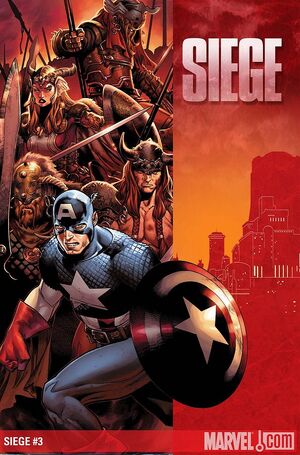

Siege #3: I read recently that someone says Siege is a terrible series, partially because the Marvel solicits for the “Heroic Age” give away the ending, and partially because the urgency is lost on the changes coming our way. I disagree because knowing the end of a story doesn’t make the journey any less important. And, secondly, because to dismiss Bendis and Coipel’s work would be a sin. Bendis times the splash pages magnificently in this issue -- and there are some amazing full page scenes that, I feel, Olivier Coipel captured perfectly. That said, I could have done without the President/Chief of Staff expository explanations. They cheapened the overall effect of the piece. I understand why Bendis does this: there are somethings he needs to explain without coming out and just saying them. For this issue, however, it doesn’t work well. It feels lazy, and distracts from the artwork. The end of the issue, however, was a bonus. If you have any doubt that the Sentry is one crazy dude, look no further than the last page. We know that Marvel’s Heroic Age is coming, but getting there seems like the true point of Siege.

DC:

Green Lantern Corps #46: Occasionally, major things happen in a character’s universe, and these issues are revisited for the visceral impact they have. A few years ago, DC came under fire when Green Lantern Kyle Rayner found his girlfriend’s body stuffed in a refrigerator. Major Force was responsible for this incident in Green Lantern #54. The incident was so powerful that it forced a new term: “stuffed in the fridge,” a colloquialism that refers to a person dying a very gruesome death. Anyway, Peter Tomasi doesn’t forget this, and neither do the Black Lanterns. The revisitation of this scene gives insight in the the mind of the Black Lanterns, something that Tomasi and Johns have enjoyed doing during this whole series. The rest of the issue is filler and fodder for Blackest Night #8. I hate to say that this series has dragged on at this point, but I would like to see it come to an end. Green Lantern Corps has been a consistently strong title, and I’d like to see it once again operate independently from the Green Lantern universe. I think Tomasi has many stories to tell, and I’d love to see him given the opportunity to tell them.


Misc:

Joe The Barbarian #3 (Vertigo -- Morrison & Murphy): The allure of Grant Morrison’s fantasy epic has not worn off. Joe the Barbarian continues to be a fun read, a visual gem, and a comic book achievement. I’m reminded of Stephen King and Peter Straub’s The Talisman as I read this. It bounces between two worlds, Joe taking different roles in each, much like Jack Sawyer in The Territories. I think we’ve just been introduced to the major villains of the story, but it’s hard to tell. Regardless of Morrison’s erratic storytelling, Sean Murphy is the heart and soul of the series. If not for his humanity, I don’t know if the series would be as impressive as it is.


Fade to Black #1 (Image -- Mariotte and Serra): So now we’ve moved from Zombies to Cannibals in Image’s new comic, Fade to Black. The story is this: a group of actors and film crew members return to their encampment to find it desolated, the people they left behind torn apart. I don’t like that one of the villains had to ask the other for an explanation as to their purpose -- this I found to be lazy writing. It could have been something saved for a later issue, or a moment presented better than a character turning to one and saying, “Tell me again . . . make me understand”. Fade to Black’s introductory issue is nothing spectacular. There’s not much more to the characters than surface level descriptions and pithy, one dimensional actor dialogue. I’m not, however, writing the series off. I think there’s a lot of potential here. The characters are stranded (always a terrifying thought), and they’re faced with something that isn’t supernatural in its nature. It’s just a group of freaks who, in thoughts representing cults, support the belief of consuming human flesh to achieve enlightenment. I hope the first issue is the one that sets everything up before it comes toppling down because if there’s another “explanatory” moment in the next issue, it will be my last foray into Fade to Black.


American Vampire #1 (Vertigo -- Scott Snyder, Stephen King & Rafael Albuquerque): After the dismal disappointments that are The Talisman, The Stand, and the loathed Dark Tower series, I was excited to see Stephen King make his personal contribution to the world of comics. Before I get to his story, however, I have to laud Rafael Albuquerque for his art in this issue. It’s broken into two short and intertwining stories. You would think, however, that a different artist illustrated the first and second parts. The first part, however, highlights Albuquerque’s and Dave McCaig’s skill with ink. The second, in a completely different vein than the first, uses much more irregular tones, jagged lines, and rough pencils. So how does Stephen King do in his first true comic? He’s phenomenal! It’s very “King,” if that makes any sense. There are the standard King digressions, albeit in dialogue. But there’s still the skewed take on humanity that people will recognize from King’s novels. It’s full of rapists (a favorite trait King uses to single out his truly demented characters), psychopaths, murderers, and clowns (not literal clowns -- there’s enough scary things in this issue without overdoing it). I like where this series is going. King knows how to construct a story, and he’s definitely opened the door for several different plot threads, all of which (I hope) will be addressed by the time the series runs its course. The freedom given by Vertigo really allows King to work beyond the normal restrictions imposed by the bigger comic companies. I feel bad for Scott Snyder because he writes an equally creepy story that hearkens back to the innocent damsel whose naiveté gets her wrapped up in a world of violence and destruction, but he has to compete with Stephen King. Any publicity, however, is good publicity and his tale will be read as much as King’s. The story, eventually, will get to a band of vampires who derive their power from the sun, and while this idea is hinted at in this issue, it isn’t fully explored yet. Pick up American Vampire -- it’s a fun read, and the perfect forum for someone like Stephen King.

Comic Reviews: Week of March 17th

DC:

Batman #697:

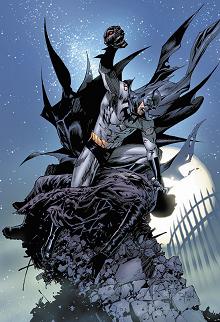
This was the best issue in Tony Daniel's "Life After Death" arc, which is too bad since it was also the finale. The long-teased identity of the Black Mask is revealed, and without giving it away, I can say that it's familiar face, and not the biggest surprise. However, the real highlight here (other than Catwoman getting a sidekick) is Daniel's Dick Grayson. Daniel's art has always been impressive, but in this issue his writing is finally on par with the pencils. Especially in the last few scenes, it's clear that this story was really about Grayson coming into his own under the cowl, and not so much about the Black Mask. Unfortunately, the ending of the book feels like the beginning of the end for Grayson's tenure at Batman, which is a shame. I've heard it repeated elsewhere, but bringing Bruce Wayne back might be the worst thing to happen to the Bat-Books. Things are very interesting right now, and returning the Batman back to the status quo feels like a bit of step in the wrong direction. I have no doubts that the Return of Bruce Wayne story will be fantastic, but I have substantial concerns regarding what it will mean in the long run.

Brave and the Bold #32:

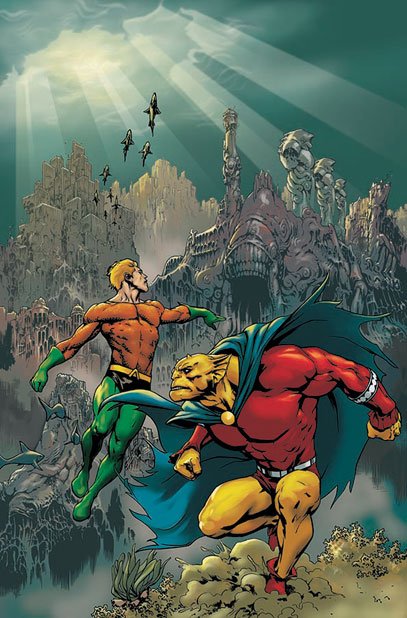
For a creative run that so far has turned out some of the best one-and-dones I've ever read, this was a great, but not amazing issue. I've never read an Aquaman story before in my life, and this is my book of the week, which is saying something. In changing up the style and telling a horror story of the sea, Straczynski once again proves that Brave and the Bold is the best superhero book currently hitting the shelves. After five solid issues of expert superhero storytelling, it's clear that Straczynski's writing thrives when he doesn't have to worry about continuity or crossover events. Time and again, Brave and the Bold has revitalized my interest in characters I had previously ignored (like Dr. Fate in #30) or never even heard of (like Brother Power in #29). This time it's Aquaman, due in no small part to Jesus Saiz's phenomenal art. As much as Straczynski is a master of the comic script, Saiz's control of the panel is stunning. The Demon is also great in this issue, although he plays a much smaller role than Aquaman. Hitting all the key notes of Lovecraftian fever dream (a delirious fisherman, grave robbing, and a Cthulu-type demon), this is an expertly crafted, imaginative comic, one that deserves a place in your collection.

The Bronx Kill (Vertigo Crime):

Though far from a crime classic,
The Bronx Kill is one of the more enjoyable, and addicting, graphic novels to be released under the relatively new Vertigo Crime imprint. The story follows Martin Keane, a semi-successful novelist who has spent the majority of his life running from his family's professional legacy of service in the NYPD. As a child, Martin's father brought him to the site of his great grandfather's murder, the Bronx Kill river, to try and inspire him to become a cop. As a grown man, Martin brings his wife to those same shores; in doing so, he unwittingly sets off a string of events that will unearth a dark family history and the truth behind his great grandfather's murder. Peppered into the story are prose excerpts from Keane's latest novel, and instead of distracting from or slowing down the main action, they reveal another layer to our frantic protagonist. Much of the Bronx Kill is spent slowly building an suspenseful atmosphere of fear and paranoia, in much the same vein as Hitchcock's better thrillers. Unfortunately, the build-up is better than the payoff, and the mystery is revealed a little too conveniently. Despite the unfulfilling reveal, the Bronx Kill is a definite page-turner: I was able to devour the book between four separate train rides in a single day, and it felt great. If you're a dedicated fan of the Vertigo Crime series thus far, I'd say pick it up; if not, find a friend who is, then steal it while he's not looking.

Marvel:

Dark Avengers #14:

In what is definitely one of the darkest issues in the series, we're reminded just how deeply sinister the Dark Avengers are, especially Bullseye. Lately, Bullseye has been regulated to the role of sadistic comic relief, which is part of what makes him so enjoyable. However, it was about time we were reminded of what makes him such a true villain: Bullseye delights in killing the helpless just as much as he does the super-powered. So while body count isn't as high as it's been in the past, his on-page murder of a female character will resonate with conscious readers for a long time. Other than that, this issue is an important companion to Siege, as it leads directly into the events of Siege #3. As Dark Avengers nears it's conclusion, I'm reminded that open-ended series are rarely as good as the shorter, more realized titles, such as this one. It'll be too bad to see them go, but something tells me we're in for one hell of a swan song.

Hercules Fall of an Avenger #1:

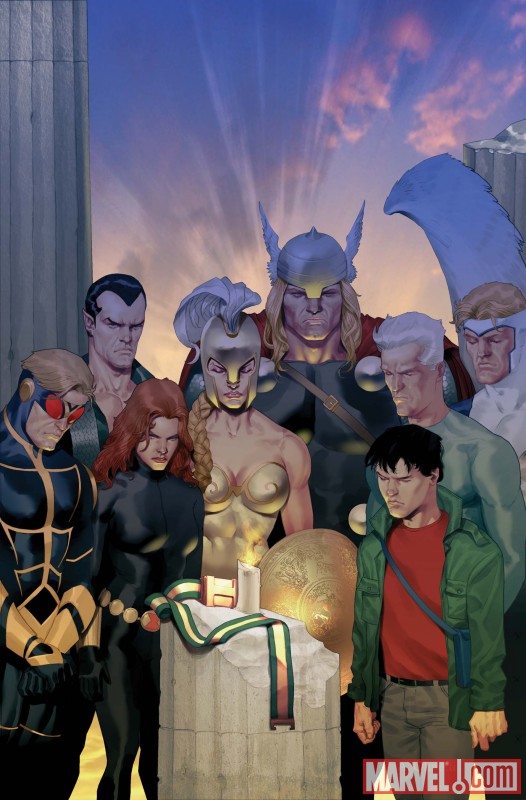
This issue was alright, but really felt like a bridge between Incredible Hercules and the upcoming Amadeus Cho seires. Here's what happens: a bunch of Marvel heroes stand around talking about why they loved the Lion of Olympus, and at the end a bunch of Gods show up to talk to Amadeus Cho about his destiny. The best part of the book is the fantastic Agents of Atlas back-up feature, wherein Venus and Namora take a trip to close out Hercules's remaining earthly affairs. The troubling thing about Fall of an Avenger is that after I finished it, I was left wondering if I really want to read an Amadeus Cho series sans Hercules. In a landscape of overly austere characters and dramatic absurdities, Hercules has always been a breath of brawny fun and the Marvel U is definitely going to be less fun without him. By spending the entire book reminding us of what makes Hercules such a fun character, Greg Pak sort of undercuts the upcoming Amadeus Cho book. I'm not going to count Amadeus Cho's series out just yet, because I have full faith in Pak's skills as a writer; but even still, I'm hoping that Hercules's absense will be short-lived.

Image:

Choker #2:

While the first issue left me a bit cold, Issue #2 doused those lukewarm feelings in gasoline and burned them to the ground. What changed? Well not a lot, but here's just a taste of what you'll get with Choker #2: super-juiced police, canibalistic freaks, poison coffee, batshit insane drug lords, an evil hand and severed testicles. If the series continues to be this weird, Choker will turn out to be the Grand Guignol comic that I'd hoped it would be. I can't wait to see where this story is going. Maybe I'm a bit caught up in my own excitement, so it might be too early to tell if the conclusion of the case will be as good as the ride, but right now that doesn't really matter. On top of the gleefully twisted art of Ben Templesmith, this issue contained some of the funniest dialogue I've seen in awhile. If you haven't already, now is the time to get your ticket to this wickedly demented, city-wide freakshow.

Misc:

The Green Hornet Year One #1 (Dynamite):

Matt Wagner writing Green Hornet one is like potatoes and gravy: it just makes sense. Delicious, delicious sense. Wagner's strength lies in writing pulp stories that don't take themselves too seriously, injecting a sense of atmosphere and fun that is sorely missed elsewhere. The 1930s gangster speak is a joy to read, as are the Green Hornet's one-liners. Like the cast of DC's First Wave, this is another pulp character I was completely unfamiliar with, and this issue makes me eager to know more. The narrative alternates between the present day 1938 and our duo's respective upbringings, making Green Hornet Year One the perfect series for my fellow uninitiated readers. Aaron Cambpell's art is a sight to behold, especially during the aforementioned Gangster scene. Wagner and Campbell make for a perfect comic book team, exemplifying all the best aspects of professional pulp storytelling.

The Muppet Show #3 (Boom Kids!):

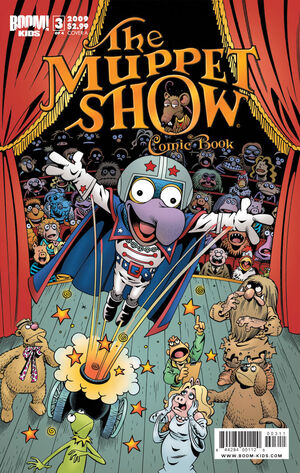
Beyond a couple of slow panels tripped up by too many characters and too much dialogue, there's really nothing bad to say about the third issue of the Muppet Show. Roger Langridge deserves every Muppet fan's personal thanks for writing a series that effectively captures the spirit of the original television series without shoehorning the Muppets into a story other than their own. Langridge has given the original Muppet formula new life, and he deserves praise for his unparalleled ability to conjure up the character's original voices in the mind of the reader. In this issue most of the Muppets return to their newly renovated theater, while Gonzo and Fozzie travel back by more unconventional means. This real stars of this issue are Statler and Waldorf, who find that their heckling skills suffer greatly when there's no Fozzie Bear around. In the end, the balcony-bound duo even get a little bit of respect, making for one of the more satisfying and memorable final pages of the week.

Muppet King Arthur #3 (Boom Kids!):

Of all the auxiliary Muppet titles to come along (ie Muppet Peter Pan and Muppet Robin Hood), Muppet King Arthur has been the most enjoyable thus far. This issue sees the knights of King Kermit's court heading out on their first quest, and despite all their best efforts, we still don't know if they'll ever find a decent reuben sandwich. Writer Paul Benjamin does right by giving each main character their own time to shine, and there's a couple of hilarious image based jokes that legitimately made me laugh out loud while reading. Plus, I'm always happy to see Scooter. Before the end, there's even a bit of Muppet treachery on the part of an unlikely pairing of a patriotic bird and an under-appreciated frogling. But yet again, the best part of Muppet King Arthur is the A cover by David Peterson. They are simply a joy to look at, and even if I knew I hated the story, I still would've bought this issue based solely on the strength of Peterson's cover. Though it's still early in the year, I already know that these will make for some of my favorite covers of 2010.

Thursday, December 17, 2009

Comic Reviews: Week of December 16th

Marvel:

1. Amazing Spider-Man #615:

Simply put: one of the best written Spidey comics to date. Superb. Javier Roderiguez continues “The Gauntlet” by next having Spider-Man battle Sandman, and while not a single punch is thrown in this issue, Roderiguez had written a stellar story that involves Spidey using his detective skills. The subplot involving J. Jonah Jameson (building off of last issue’s amazing ending) is, alone, intriguing enough to keep a reader interested. Buy this. While a comic that’s published tri-monthly may lose something in the switch between writers, this does not occur with Amazing Spider-Man 615. Terrific issue.

2. Dark Avengers #12: I’ve said before that I love the way Bendis writes The Sentry. He excels at it in this issue. The story is phenomenal, and a character I’ve never heard of, Molecule Man, is presented as possibly the most powerful villain in the Marvel U -- until The Sentry shows us his true power. Again, buy this. An incredible issue that sets up Marvel’s next big event, “Siege”.

3. Captain America Reborn #5: I’m looking forward to this series finishing because I think the conflict of two Captain Americas is much more interesting than the concept of bringing Captain America back. It’s a fight we all knew was coming, and now we have it -- except it feels too trite, too forced, and too clichéd. Wait for Brubaker to finish this “event” before returning to the regular Captain America series.

4. Ultimate Armor Wars #3: I love Warren Ellis’ writing. Here, however, it’s forgettable. I’m reading this series because I’m interested in the Ultimate Marvel Universe. While I like it, I’m not pushing anyone towards it because I feel nothing will be gained or lost by sticking with it.

5. Spider-Man -- Clone Saga #4: The original Clone Saga was what got me in to comics. I know -- a pretty crappy entrance. But, I was intrigued by the back story, and how the writers had used a pretty insignificant part of Spider-Man’s background to build a new character and a new life for him. It was Marvel’s first attempt at a Spider-Man reboot. While it didn’t take (for a myriad of reasons), it was, I feel, partially responsible for the Ultimate Universe. Plus, I still have a thing for clones. So, I’m reading this series because I’m curious to see what Tom DeFalco and Howard Mackie are going to do. Otherwise, don’t waste time on this. Read the summaries online and save yourself the money.

IDW:

1. Locke and Key Crown of Shadows #2:

Joe Hill has become a surprisingly adept comic book writer. I read his novel, Heart Shaped Box, and felt that it was a typical first novel -- neither bad nor good. I hope, however, he sticks with comic book writing because he can craft a hell of a story. If you haven’t been following Locke and Key, I recommend picking up the trades. Gabriel Rodriguez captures Hill’s timing perfectly, and both men have been able to create a lucid world filled with fantastical elements. Read this. Well, read the older issues, then read this. I don’t think you’ll be disappointed.

2. Ghostbusters Displaced Aggression #4: I can’t tell if there’s a cult love for Ghostbusters, a true love of the material, or if it’s just the “in” 80’s thing. I love that IDW published a Ghostbusters mini-series; I wish they would make it a regular thing. It would be fun to read about the Ghostbusters in their prime, showing them doing what they do best -- capturing ghosts. It’s the formula that worries me. Heroes meet villain; villain destroys heroes; heroes regroup; heroes defeat villain by combining forces. I would prefer a few stand alone issues rather than complicated arcs that involve Gozer over and over. The movies have spectacular montages that could be explored in more depth. What IDW really needs is Dan Akroyd and Harold Ramis to pen a Ghostbusters tale. The people who are trying to imitate the material are not succeeding.

DC Comics:

1. Green Lantern Corps #43:

I’ll give you two reasons to buy this issue. 1. Guy Gardner becomes a red lantern, pulls off the arm of a yellow lantern and stuffs it down his throat. 2. Mogo returns (Mogo is a planet sized green lantern). I professed my love for Peter J. Tomasi last week. I picked up GLC this week because he penned it, and I’m not disappointed. Plus, DC has been able to put some pretty stellar artists on their Green Lantern comics. It’s a good mix that makes the series so incredible. Keep up with “Blackest Night”. It’s DC’s shining moment.

Thursday, December 10, 2009

Comic Reviews: Week of Dec. 9th

MARVEL:


1. Amazing Spider-Man #614:

Mark Waid is one of my favorite writers, so usually I'm biased when it comes to reviewing a comic he wrote. Amazing Spider-Man is building up to something, and I'm glad Waid is the one behind the wheel. Spider-Man has a group of foes which occasionally band together to be known as the Sinister Six. This is a build up to a similar story (I think). So what we have here is Waid empowering Electro in a way that makes him seem extremely dangerous to the point where, when he was off panel at the end, I assumed he had escaped and I felt a tinge of disappointment that Spider-Man's efforts were for naught. The end of the comic is pretty shocking (no pun intended), and I'm glad Waid was the one that delivered. If you're a Spidey fan, I'd pick this up. I see an impressive storyline in the making. Paul Azaceta's art adds to the mess of the situation. He's good at maintaining the chaos that Waid is writing.


DC:

2. Action Comics #884: First off, Pere Perez and Bit do a fantastic job on the art here. They capture the agony of Nightwing, and the ache of Flamebird. Greg Rucka is a wiz when it comes to comic writing. The issues here are leading up to Superman #700, and Action Comics is only ten issues behind, so I feel like something big is on the horizon. I feel the weight of a convoluted storyline, however, and I wouldn't recommend this title unless you're interested in what's going on in the Superman universe right now.

3. Red Robin #7:
Okay. So, I started picking this up because, like most other comic fans, I was excited by seeing Red Robin back in action (last glimpsed in Mark Waid & Alex Ross' brilliant "Kingdom Come" series). Now, however, I'm getting ready to drop the series. Chris Yost is attempting to build a world for Tim Drake, but I really could care less. I got to the end, looked at the characters, realized I didn't know who some of them were, and realized I didn't care. I'm going to see this arc through to the end, but nothing much is going on here. While I like the idea of Tim Drake being the detective, and searching for Bruce Waye, I feel no urgency to keep up with this title.

4. Adventure Comics #5: Have you ever wanted a glimpse inside the DC Comics offices? This is your chance. Geoff Johns crosses the fourth wall (or is it the fifth?) by taking Superboy Prime into the REAL world where he encounters Dan DiDio and the rest of his staff. Since Johns is scripting "Blackest Night," glimpses of that story are found here. For the most part, however, this is a forgettable issue. Johns has been mostly covering the Conner Superboy. That story is interesting. This one? Not so much.


IDW:

5. Ghostbusters: Past Present and Future (one shot): I love IDW. They publish the greatest stuff! They have recently undertaken a Ghostbusters series that is . . . okay . . . and my problems with it are reflected in this issue. While I love the idea of a Ghostbusters comic book, Rob Williams writes Venkman as the consistent comic relief. It gets tiresome. Ray, Egon and Winston do little here to contribue to the story. While I got a chuckle out of some of the references penned in this issue, I feel that the strengths of the other characters is dropped in place of a few (not well done) cheap laughs. I do hope, however, that IDW continues to publish a Ghostbusters comic book because while I would love to see a Ghostbusters 3, I feel the comics can capture the best elements of the movies and condense them into interesting, one, two, or three part stories.


IMAGE:

6. The Walking Dead #68:
Robert Kirkman is a great writer, and The Walking Dead is a great series. I remember being bored with The Walking dead in the early 40's issues. But when I hit issue 48 through 52, and was able to see all that Kirkman had built up? I was floored. This is a similar issue. I will always recommend the Walking Dead, and if you haven't read an issue, I recommend collecting the trades and joining in. This is the beginning of something big. It has the same feel as the "Governor" arc (which, if you've read TWD, you know what I'm referencing; if you haven't, you're missing out). This issue has the same feel -- we're building to something. The newest character, Aaron, is creepy as hell. He's a little TOO perfect, and if you're a fan of TWD world, you know that anything that's too good to be true usually is. Pick this up and enjoy the hell out of it.


P.S. Some big comic book news came out this week as well: We heard that the Vulture may be the villain for Spider-Man 4, Bruce Wayne--much like Captain America--is lost in time and DC will explore his travels through history in a brand new series entitled "The Return of Bruce Wayne."

DC has also announced a new series called "Earth One" that will retell the origins of it's major characters 75 years after their creation. J. Michael Straczynski and Geoff Johns will pen the tales of Superman and Batman (respectively) and Shane Davis and Gary Frank (respectively) will illustrate. While I'm not familiar with Shane Davis' art, I know Gary Franks' art very well (he's one of my fav's) and you can Google his art for Bruce Wayne's Batman costume. Check it out. It's worth the price of admission.

Saturday, July 18, 2009

Comic Book Review: Shangri-La (Image Comics)


"The road to Heaven is paved with dead rock stars."

Shangri-La, published by Image Comics in 2004, written by marc Bryant and drawn by Shephard Hendrix, is a 72 page graphic novella about dead rockstars, record business conspiracies, and contract killers. With cameo appearances by Elvis, John Lennon, Jim Morrison, and other rock legends, this book is a bit more than it seems.

Correy Stinson is at the height of his career, but due to his diva demands he's replaced by a new singer, who rockets the band to new success. Now that Stinson is obsolete, the mysterious Ms. Cope plans to fake his death to promote record sales. When he backs out at the last moment they send Jetta Helm, a hired killer, to take him out.

Too bad she's his biggest fan. When the time comes to kill her idol and frame him for a murder/suicide, she just can't pull the trigger. So they go on the run, which forces the label to up the ante, sending a psychotic killer/failed country singer to clean up the mess.

Throw in a background of rockstars watching the events from Heaven (Shangri-La!) and an Illuminati influenced shadow cabinet and you've got a weird rock'n'roll take on the "assassin on the run with their intended victim" storyline.

The art borders on realistic with splashes of cartoony reactions, and is delivered in well balanced black and white. The story moves along at a good pace, and jumps the less important moments without feeling like you're transitioning too quickly. With a price tag of $7.95 this is a book that feels worth a purchase and solid enough for a few re-readings. Fun, inventive, and a complete story.

Buy this book here!

hit counter dreamweaver
web counter html code